
TTN
Best Time to Visit Nepal: A Season-by-Season Guide
Nepal's weather varies dramatically by season and by altitude. Here's how to match your trip — trekking, wildlife safari, or cultural travel — to the right time of year.
Bijaya Poudel 6 min read
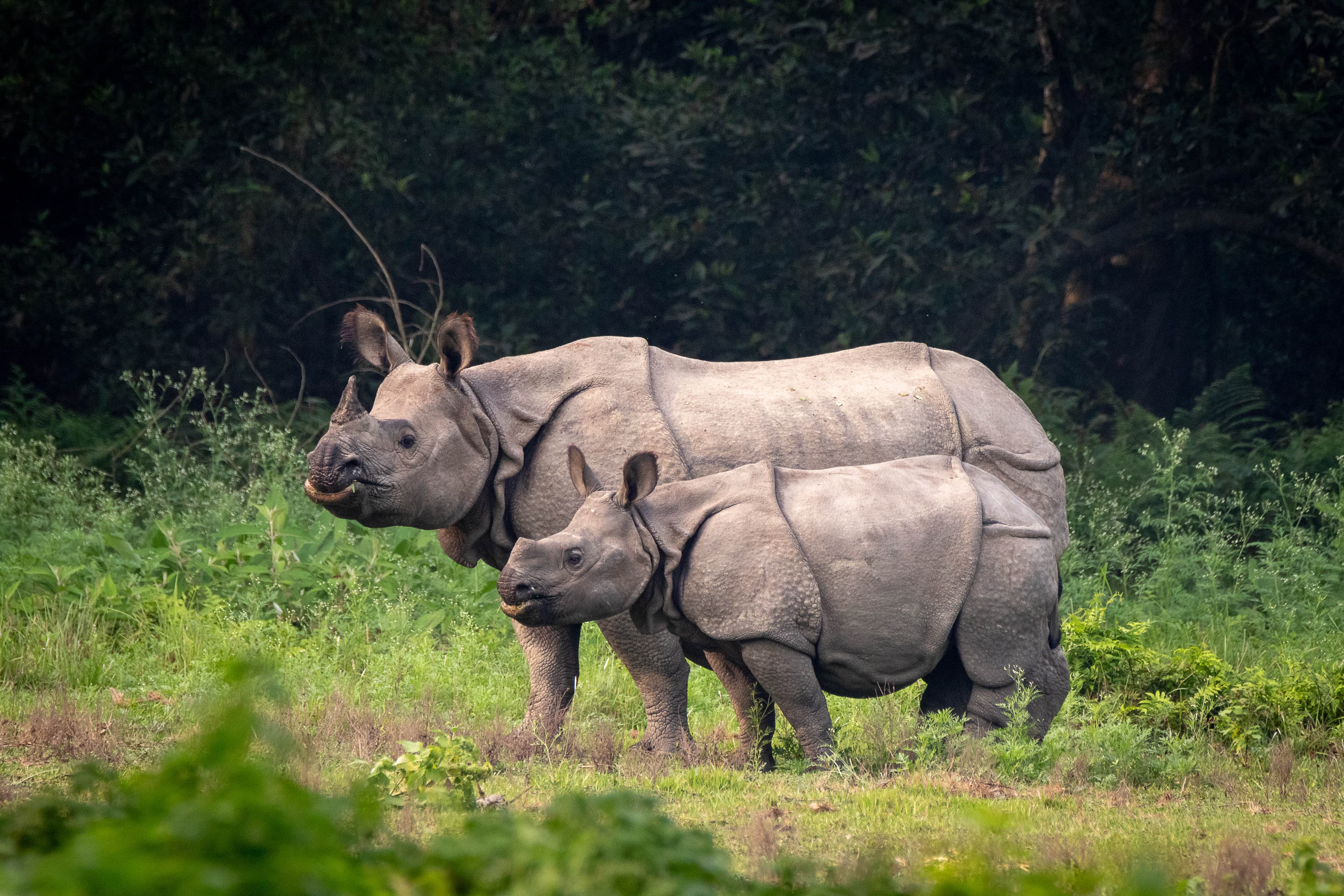
Chitwan National Park, established in 1973 in the Terai lowlands of south-central Nepal, was the country's first national park and remains its best-known wildlife destination. Granted UNESCO World Heritage status in 1984, it covers 952.63 km², with elevation ranging from around 100 m in the river valleys up to 815 m in the Sivalik Hills that mark its northern edge. Its mix of sal forest, tall elephant grassland and river floodplain along the Rapti and Narayani rivers makes it one of the most ecologically significant protected areas in South Asia.
Chitwan supports one of the most significant populations of the greater one-horned rhinoceros anywhere in Asia, and rhino sightings on a jeep or canoe safari are common — this is one of the most reliable places in the world to see the species in the wild. Wild Asian elephants, several deer species (spotted deer and sambar among them), gharial and marsh mugger crocodiles basking on riverbanks, and a wide range of birdlife round out the park's more frequently spotted residents. Bengal tigers are also present, and camera-trap monitoring has shown Chitwan's tiger population growing in recent years as part of Nepal's broader conservation efforts — but a tiger sighting remains a matter of considerable luck rather than expectation.
Jeep safaris cover the most ground and are the most common way to explore the park's core area over a half or full day. Canoe trips along the Rapti River offer a quieter, lower vantage point for birdlife and crocodiles, often gliding past rhinos drinking at the water's edge. Guided walking safaris — always with an armed park guide for safety — bring visitors closest to the forest itself, moving on foot through terrain jeeps can't reach. Most itineraries based in Sauraha, the park's main gateway town, also include a visit to the nearby Elephant Breeding Center and a Tharu cultural program.
The buffer zone around Chitwan is home to the Tharu people, an indigenous community of the Terai with their own language, distinctive mud-and-thatch architecture, and cultural traditions. Many Sauraha lodges are Tharu-run or employ local guides, and a Tharu stick dance performance — a genuine community tradition rather than something staged purely for visitors — is a common evening activity.
The dry season from October to March offers the best wildlife viewing, with cooler temperatures and thinner grass making animals easier to spot from a distance. April and May are hot, but coincide with the grass-cutting season, when villagers harvest the tall elephant grass and sightlines into the park interior open up further. The June–September monsoon brings heavy rain and flooding risk, and most lodges scale back safari operations during this period.
Chitwan is roughly 5–6 hours by road from Kathmandu or Pokhara, or a short domestic flight to Bharatpur. Most visitors stay two to three nights in Sauraha or one of the park's concession-area lodges, long enough to fit in a full-day jeep safari, a canoe trip, and a walking safari or cultural visit.
Always keep a safe distance from wildlife and follow your guide's instructions closely on walking safaris — rhinos and elephants are both capable of sudden, fast charges despite their size. Bring neutral-colored clothing, insect repellent and sun protection; October–March mornings on the river can be cool enough for a light jacket.
Nepal's weather varies dramatically by season and by altitude. Here's how to match your trip — trekking, wildlife safari, or cultural travel — to the right time of year.
One-horned rhinos, wild elephants and, if you're fortunate, a Bengal tiger — inside Nepal's first national park and a UNESCO World Heritage Site in the subtropical lowlands of the Terai.