
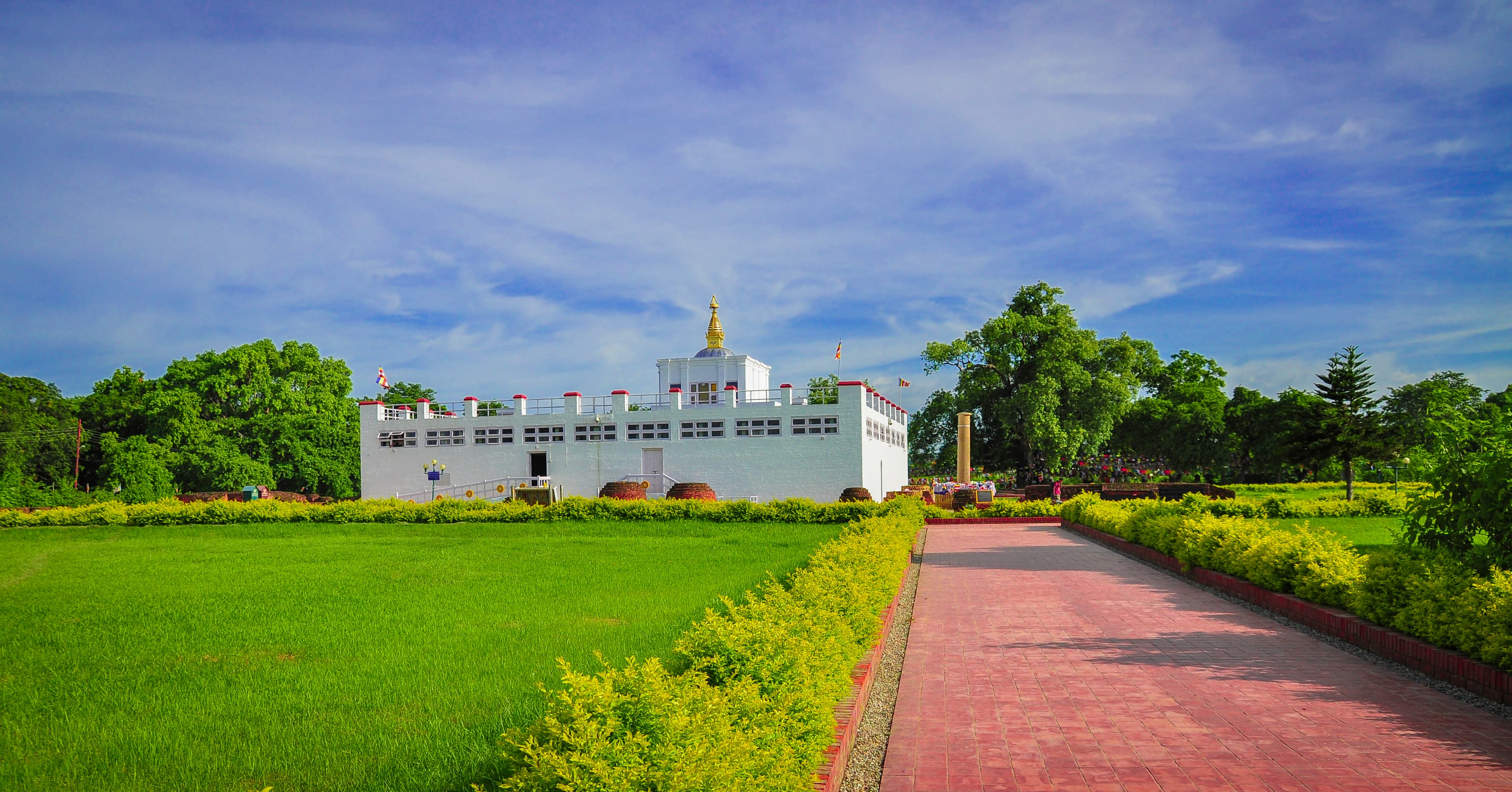
Lumbini is a UNESCO World Heritage Site in the Rupandehi District of Lumbini Province, in the flat Terai lowlands near Nepal's southern border with India. According to Buddhist tradition and sacred texts, Queen Maya gave birth to Siddhartha Gautama, the Buddha, here around 563 BCE, making Lumbini one of the four most sacred pilgrimage sites in Buddhism, alongside Bodh Gaya, Sarnath and Kushinagar. UNESCO inscribed the site in 1997, recognizing both its religious significance and the archaeological evidence found here.
The sacred garden
At the center of the site is the Mayadevi Temple, built around the exact spot Buddhist tradition identifies as the Buddha's birthplace, and containing a marker stone and brick structures from several historical periods of construction and reconstruction. Nearby stands the Ashoka Pillar, a sandstone column erected during the 3rd century BCE by Emperor Ashoka, whose inscription is one of the key pieces of historical evidence confirming Lumbini's identification as the Buddha's birthplace. A sacred pond, the Puskarini, sits beside the temple — tradition holds that Queen Maya bathed here before giving birth, and that the infant Buddha had his first bath in its waters.
The monastic zone
Beyond the core sacred garden, Lumbini's development plan (designed by architect Kenzo Tange) lays out a long monastic zone split into eastern (Theravada) and western (Mahayana and Vajrayana) sections, where Buddhist organizations from countries including Myanmar, Thailand, Sri Lanka, China, Japan, Vietnam, Cambodia, Germany and others have built monasteries and temples in their own national architectural styles — meaning a single visit can take in a striking variety of Buddhist building traditions in one place. A large World Peace Pagoda, funded by Japanese Buddhist organizations, stands at one end of the zone. The Lumbini Museum and the Lumbini International Research Institute, both near the site, hold archaeological finds and support ongoing scholarship on the area's history.
Best time to visit
October through March offers the most comfortable temperatures for a Terai destination — summers (April to June) are hot and humid, and the June–September monsoon brings heavy rain and higher humidity. Buddha Jayanti (Buddha's birthday, on the full moon of the Nepali month of Baisakh, usually falling in April or May) is Lumbini's single most significant day of pilgrimage and celebration, drawing large crowds of devotees.
Getting there
Lumbini is most commonly reached by road from Kathmandu (roughly 8–10 hours) or Pokhara, or by domestic flight to nearby Bhairahawa (Gautam Buddha Airport), which also has limited direct international connections from a few regional cities, reflecting Lumbini's importance as a global pilgrimage destination.
Practical tips
The monastic zone is large — closer to a 3 km stretch than a walkable single site — so most visitors explore by rented bicycle or the site's electric shuttle rather than entirely on foot. Dress modestly and remove shoes before entering temple interiors, and keep noise to a minimum around the Mayadevi Temple, which remains an active site of prayer and pilgrimage rather than only a historical monument.