

Nepal's laid-back lakeside city is the gateway to the Annapurna range and one of the best adventure-sports bases in South Asia. Here's how to plan a trip to Pokhara.
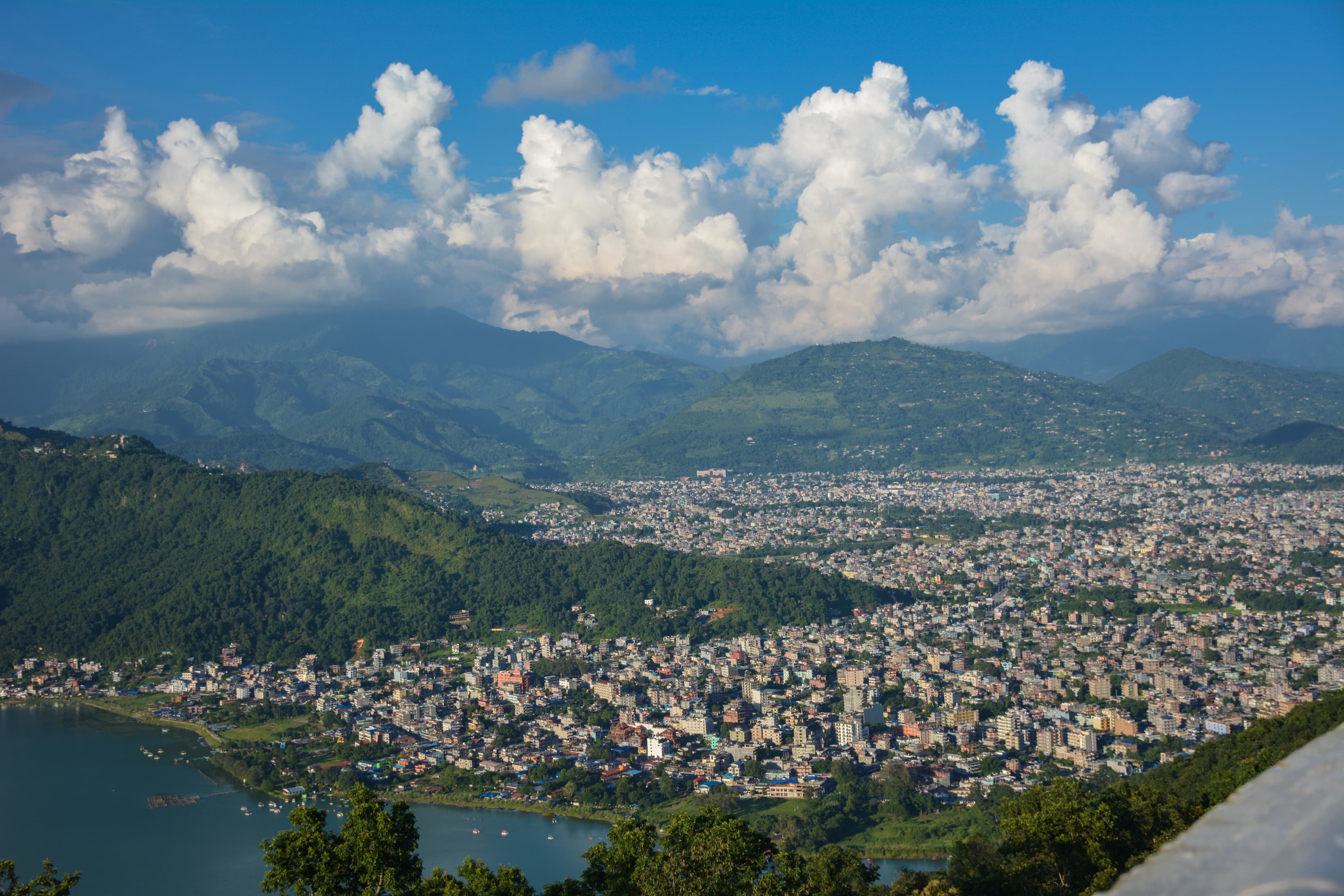
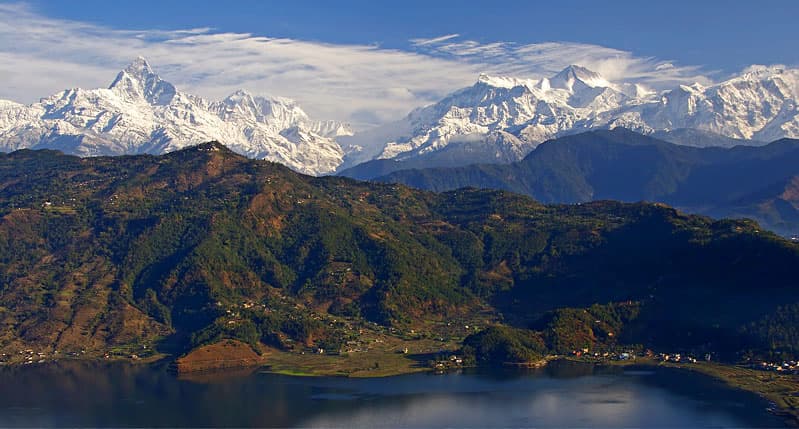
Pokhara sits on the shore of Phewa Lake with the Annapurna range rising almost directly behind it, and on a clear morning Machhapuchhre — the sacred, unclimbed "Fishtail" peak — appears close enough to touch. It is Nepal's second-largest city but feels far smaller: slower-paced than Kathmandu, and built almost entirely around the lake, the mountains, and the travelers who come for both.
Phewa Lake and Lakeside
The Lakeside (Baidam) neighborhood, strung along the eastern shore of Phewa Lake, is where most visitors base themselves — a walkable stretch of guesthouses, cafés and gear shops. Rowing or paddling a traditional wooden boat out to the small Tal Barahi Temple on its island is one of the simplest, most popular things to do in the city, especially near sunset when the Annapurnas turn pink.
Sarangkot and mountain views
Sarangkot, a hilltop village above the city, is the classic sunrise viewpoint for the Annapurna and Dhaulagiri ranges and is also one of the most established paragliding launch sites in the world — tandem flights from Sarangkot down to Lakeside are a signature Pokhara experience, weather permitting.
Gateway to the Annapurnas
Pokhara is the starting point for most Annapurna-region treks, including the Annapurna Base Camp trek (typically 7–10 days) and the Annapurna Circuit. Even travelers not planning a multi-day trek often do a short walk to Australian Camp or Dhampus for a taste of the trail and Himalayan views without the full commitment.
Caves, gorges and the World Peace Pagoda
Pokhara's karst landscape has produced several notable caves, including Mahendra Cave and the deep, water-carved Gupteshwor Cave, close to Devi's Fall, where the Pardi Khola river vanishes underground. Across the lake, a steep but manageable climb leads to the World Peace Pagoda, a stark white stupa with one of the best panoramic views of both the lake and the Annapurna skyline.
Adventure sports
Beyond paragliding, Pokhara has become a genuine adventure-sports hub: ultralight flights over the Annapurnas, zip-lining, white-water rafting on the nearby Seti and Trishuli rivers, and one of the world's highest-bungee-adjacent canyon swings at the Kushma bridge, a couple of hours west of the city.
Getting there and when to go
Pokhara is roughly a 25-minute domestic flight from Kathmandu, or a scenic 6–8 hour drive along the Prithvi Highway. As with the rest of Nepal, October–November and March–April offer the clearest mountain views; the monsoon months (June–September) bring lush green valleys but frequent cloud cover over the peaks.
Related destinations
More stories
Nepal Visa Guide: How Tourists Can Enter Nepal
Most travelers can get a Nepal tourist visa on arrival at Kathmandu's airport or a land border. Here's how the process works, what documents you need, and what to double-check before you fly.
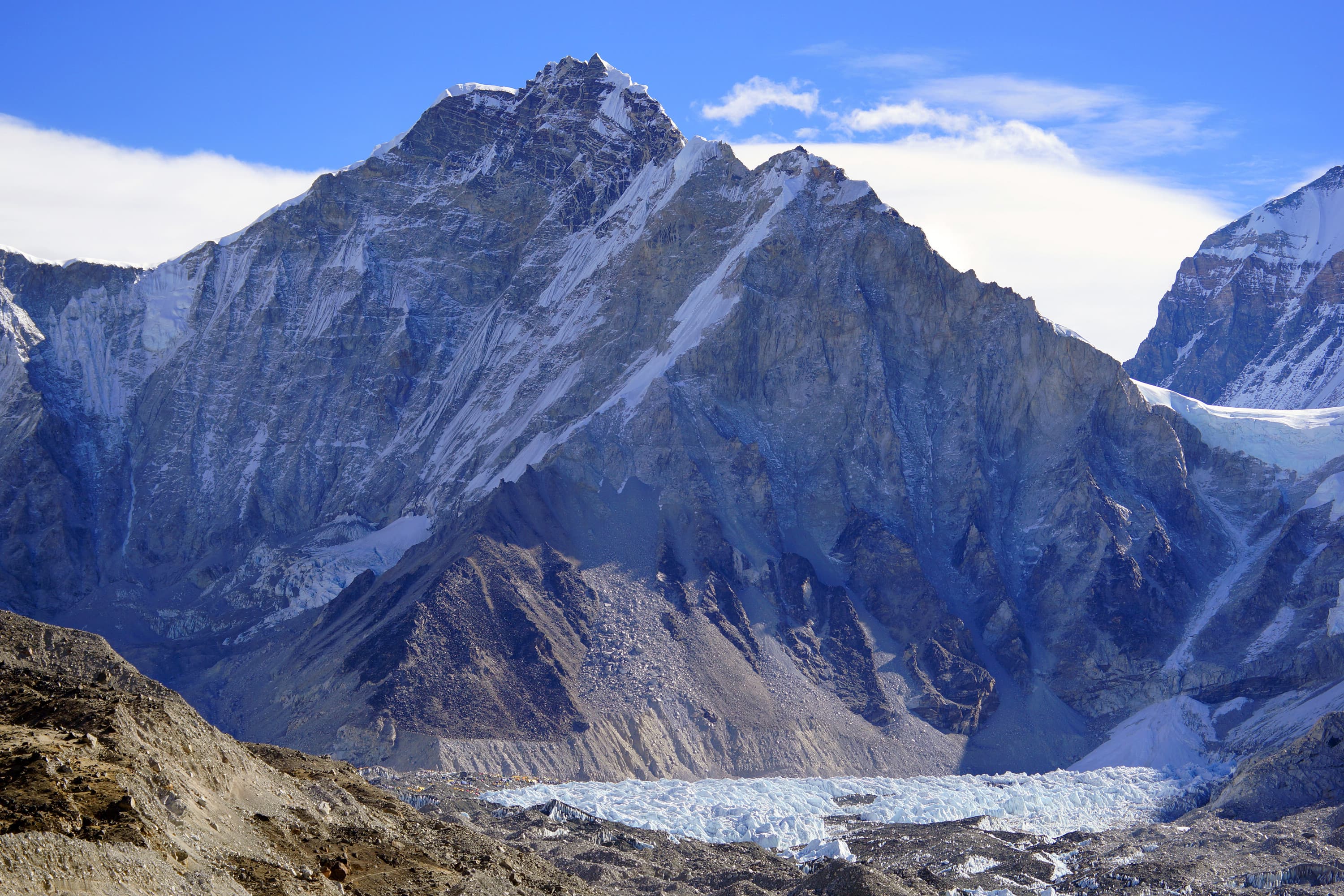
Everest Base Camp Trek: The Complete Planning Guide
Everything you need to know before you go — route, permits, altitude, best seasons, and what the 12-day trek to the foot of the world's highest mountain actually feels like.
Trekking Permits in Nepal Explained: TIMS, ACAP & National Park Fees
Nearly every trekking route in Nepal requires at least one permit. Here's what TIMS, ACAP, and national park entry fees actually cover, and where to arrange each one.